Checking property taxes in Allen County shouldn’t feel like decoding a government puzzle, yet many homeowners freeze the moment they open a county website. You just want to know how much you owe, whether it’s paid, and if anything looks wrong. Instead, you’re bounced between offices, links, and unfamiliar terms. This guide exists to end that confusion. It shows you exactly where to look, how to search by address, how to understand your tax bill, and who to contact when something doesn’t add up. No guessing. No third-party noise. Just clear, official answers you can trust.
I Don’t Know Where to Check My Allen County Property Taxes
The correct starting point for an Allen County property tax lookup is always the Allen County Treasurer for payment status and bills, and the Allen County Auditor for property values and assessments. Third-party websites often mix data or lag behind updates, which creates confusion. The Treasurer shows what you owe and whether it’s paid, while the Auditor explains why that amount exists. Using these two official sources together ensures you’re looking at real, current tax records backed by the county. This separation of roles is intentional and understanding it prevents unnecessary panic. Once you know which office does what, the entire process feels far more controlled and predictable.
I Just Want to Search by Address, Not Parcel Numbers
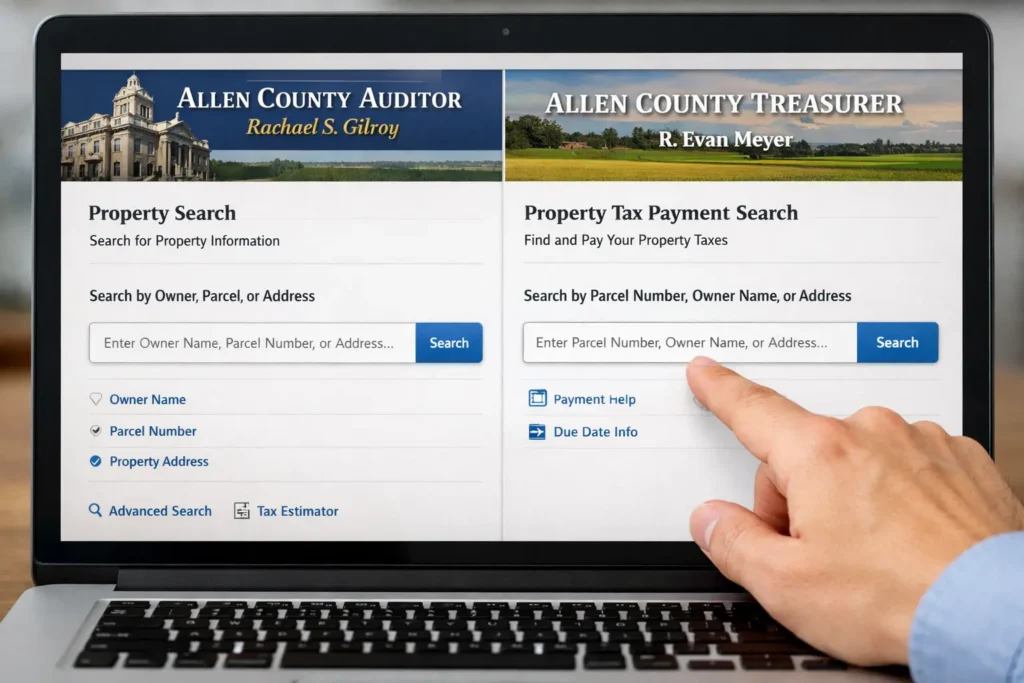
You’re not expected to know a parcel number, and most people don’t. Both the Allen County Auditor and Treasurer systems allow property tax search by address, which is the easiest option for homeowners. Enter the street address exactly as it appears on mail, and the system pulls the correct parcel automatically. Parcel numbers are optional and mostly used by professionals, so address lookup is the fastest and least frustrating path. This is especially helpful for new buyers who are unfamiliar with county systems. Address-based search removes the feeling that property taxes are reserved for insiders only.
My Tax Bill Amount Doesn’t Make Sense
Property tax amounts change based on assessed value, millage rates, and any exemptions applied to the property. The Auditor determines the assessed value, while local tax rates are set by school districts and municipalities. If your bill went up or down, it’s usually due to a reassessment, a levy change, or the addition or removal of an exemption. Once you understand these three components, the math behind your Allen County tax assessment becomes far less mysterious. What looks like a random increase usually has a clear paper trail. Knowing where to look helps you verify whether the change is justified or needs review.
I Can’t Tell If My Property Taxes Are Paid or Overdue
Payment status is shown on the Allen County Treasurer’s records, but many users miss it because it’s buried in tables. Look for labels such as “paid,” “unpaid,” or “delinquent,” along with due dates for each half of the year. If a balance shows zero, the payment has been received. If an amount remains, it means action is still required to avoid penalties. Misreading this section is one of the most common causes of unnecessary stress. Taking a moment to read the status carefully can prevent late fees entirely.
What Happens If I Miss a Payment?
Missing a property tax payment in Allen County leads to interest charges and late fees added over time. If taxes remain unpaid long enough, the account can become delinquent and eventually subject to enforcement actions under Ohio law. The key point is timing. Paying late costs money, but ignoring the bill costs far more. Acting early keeps the situation manageable and prevents long-term consequences. Most serious problems come from avoidance, not from a single missed date. Understanding the timeline gives you room to respond before things escalate.
I Don’t Understand Exemptions or Reductions
Many homeowners qualify for property tax relief and never realize it. Common Allen County exemptions include the Homestead Exemption for seniors and disabled homeowners, as well as agricultural and other qualifying reductions. Eligibility depends on age, income, disability status, and property use. Even one approved exemption can significantly lower your annual tax bill, making this one of the most overlooked savings opportunities. These programs exist specifically to reduce financial pressure on qualifying residents. Missing them often means paying more than you legally need to.
I Want to See Past Tax History for a Property
Past tax records are available through the Auditor and Treasurer systems and can usually be viewed year by year. This history shows how taxes have changed over time and whether payments were made consistently. Buyers, investors, and heirs use this information to spot trends, verify obligations, and avoid surprises. Tax history provides context, not just numbers. A stable pattern often signals predictable future costs. Sudden spikes or gaps can be early warning signs worth investigating further.
I’m Buying a Property and Need Accurate Tax Info
Before closing on a home, checking Allen County property taxes is essential. Tax lookup data helps buyers estimate future expenses, confirm prorations, and avoid unexpected bills after purchase. Lenders and agents rely on these same records during due diligence. Using official county data ensures you’re budgeting with facts, not assumptions pulled from listings. Many first-time buyers underestimate how much taxes affect monthly costs. Accurate tax data protects you from post-closing surprises that strain finances.
The Website Is Confusing and Full of Jargon
County tax websites are built for accuracy, not comfort. Terms like assessed value, millage, and delinquent can feel intimidating, but each has a simple meaning tied directly to your bill. Once you know what those labels represent, the screens become readable instead of overwhelming. You don’t need to understand everything, just the few terms that affect your amount owed. Most confusion comes from unfamiliar language, not from complex rules. Translating those terms into plain English removes most of the fear instantly.
I Don’t Know Who to Contact If Something Looks Wrong
Errors happen, and Allen County provides clear paths to fix them. If the issue involves payment status or balances, contact the Treasurer’s Office. If the problem is value, exemptions, or property details, the Auditor’s Office is responsible. Appeals and corrections follow specific procedures, but starting with the right office saves time and frustration. Calling the wrong department often delays resolution by weeks. Knowing who handles what puts you back in control immediately.. If the problem is value, exemptions, or property details, the Auditor’s Office is responsible. Appeals and corrections follow specific procedures, but starting with the right office saves time and frustration.
Quick Allen County Property Tax Lookup Checklist
- Go to the Allen County Treasurer website
- Search by property address
- Confirm payment status and due dates
- Visit the Allen County Auditor website
- Review assessed value and exemptions
- Check past tax history
- Save or print records
- Contact Treasurer or Auditor if errors appear
Where to Find Allen County Property Tax Information
| What You Need | Office to Use | What It Shows |
|---|---|---|
| Tax bill amount | County Treasurer | Amount due and balances |
| Payment status | County Treasurer | Paid or unpaid taxes |
| Due dates | County Treasurer | Installment deadlines |
| Assessed value | County Auditor | Taxable property value |
| Exemptions | County Auditor | Approved reductions |
| Tax history | Auditor & Treasurer | Year-by-year records |
| Appeals | County Auditor | Valuation disputes |
Conclusion
An Allen County property tax lookup doesn’t require special knowledge, just the right path. The Treasurer tells you what you owe and whether it’s paid. The Auditor explains why that amount exists. When you use both together, confusion disappears. Instead of guessing or trusting third-party sites, you gain control over your property taxes with official, reliable information. That clarity protects your money and your peace of mind.
FAQs
1. Can I check Allen County property taxes for free?
Yes. Allen County provides free public access through both the Treasurer and Auditor websites. You can view tax amounts, payment status, and history without creating an account or paying fees.
2. Can I search using only my address?
Yes. Searching by street address is the simplest option and works for most residential properties. Parcel numbers are optional, not required, for basic tax lookups.
3. Why did my property taxes change this year?
Tax changes usually result from reassessment updates, new levies, or changes to exemptions. Even small valuation shifts can impact the final tax amount.
4. How do I know if my taxes are delinquent?
The Treasurer’s database clearly marks unpaid balances as delinquent. It also shows due dates, penalties, and any accumulated interest.
5. Do exemptions apply automatically?
No. Most exemptions must be applied for and approved through the Auditor’s Office. Once approved, they remain active unless your eligibility changes.
6. Who do I contact if my tax bill looks wrong?
Contact the Treasurer for payment, balance, or delinquency issues. Reach out to the Auditor for valuation errors, exemptions, or assessment questions.
